
CPF conceded that its failure to act in the best interest of minor child (12) raped, may have been a “lack of better judgement”
CPF conceded that its failure to act in the best interest of minor child (12) raped, may have been a “lack of better judgement.”
STATEMENT BY THE CONCERNED COMMUNITY FORUM (CCF)
Following a deeply distressing Community Policing Forum (CPF) Annual General Meeting held on June 13, 2026, the Concerned Community Forum (CCF) wishes to formally raise serious concerns regarding both the conduct of the meeting and the treatment of residents who attempted to raise legitimate community safety issues.After a prolonged and self-congratulatory presentation detailing what was described as the CPF’s “great work of the Men in Blue”. The CPF showed no respect or regard for the attendees, and the order of the meeting was “Our way or no way”.
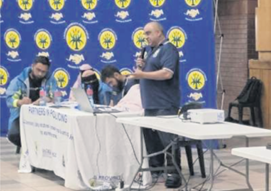
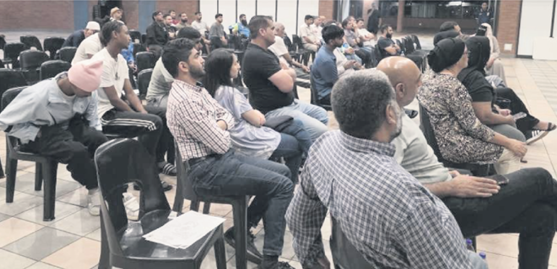
The CPF, together with Councillor Naeem Patel, repeatedly highlighted their claimed involvement in addressing Gender-Based Violence. However, these assertions are not supported by straightforward evidence or demonstrable outcomes, particularly when assessed against the handling of the recent assault case involving a 12-year-old child. This gap between public claims and actual intervention raises serious concerns about credibility, accountability, and the effectiveness of the CPF’s response to GBV.
A critical and unanswered question remains: why do crime statistics in our area continue to remain unacceptably high despite these claimed successes?
This, in turn, raises a serious concern—can residents reasonably be expected to place trust in information that is neither independently verifiable nor supported by clear evidence, particularly when such information relates to serious crimes and the protection of vulnerable victims?
Lushika Mooloo said that as members of the Concerned Community Forum, we raised issues directly affecting the safety and wellbeing of our community. Rather than receiving clarity or meaningful engagement, we were met with dismissiveness, condescension, and outright insults.

Ms Shenaz Waseem form the ANC Women’s League sought clarity from Shaheen Wahab on what measures are going to be taken to protect the children of the community from these heinous crimes, specifically the recent incident involving a minor. The CPF tap danced around the question and gave no solid commitment to what their OWN and immediate plans are. Wahab alluded to GBV training that will be taking place in February with numerous organisations – no clarity on who these organisations are, what are the goals, etc.
Shenaz added “I am deeply shaken. A 12-year old child has been assaulted and is now pregnant. While she carries trauma in her body and fear in her mind, the accused has been granted bail of R1 000—his freedom priced far cheaper than the lifelong damage inflicted on her life. The CPF stated that the child had been placed in a place of safety at the time of the bail hearing. However, this assertion is deeply troubling and requires urgent clarification. I personally saw and communicated with this 12 year-old child, who is approximately three months pregnant, walking freely within the Atteridgeville Court precinct. This raises a serious and unavoidable question: what “place of safety” was being referred to? I am completely distraught by the silence, delays, and lack of urgency that have followed this crime. The Children’s Act is unequivocal: a child’s best interests are paramount”.
Moosa Hassim added “As a former CPF member, one of the core mandates of the CPF is to initiate and support community-based crime-prevention and victim-support efforts. However, instead of meaningful action centred on the emotional and psychological trauma experienced by this child, what we are witnessing is talk upon talk—with little evidence of decisive, compassionate intervention”.
Lushika Mooloo requested clarity from the CPF Chairperson regarding a social media post suggesting that the CPF was “at the forefront” of this case. This assertion stands in stark contrast to the observable facts. The CPF was not present at the bail hearings, nor was there any discernible effort to mobilise community awareness, support, or oversight during this critical period.
Notably, the only communication issued by the CPF occurred after the matter had been exposed by the media and questions were publicly raised about the CPF’s absence. This sequence of events raises serious concerns about transparency, accountability, and the accuracy of public representations made by the CPF in relation to this case.
The CPF later conceded that its failure to act may have been a “lack of better judgement” and indicated that it would “go back to the drawing board” to discuss the matter further. This admission is deeply concerning.
Acting in the best interests of the minor and the broader community would have required proactive and visible intervention. At a minimum, this should have included the CPF’s presence at the bail hearings, as well as efforts to mobilise community support and oversight during these proceedings. The absence of such action represents a serious failure to uphold the CPF’s core responsibilities in a matter involving a vulnerable child.
Imran Ahmed of the CCF is deeply concerned by contradictory statements made by the Councillor regarding sexual assault cases. While cautioning against believing social media reports and emphasising the need to protect victims’ identities, he simultaneously disclosed details of other sexual assault cases in a public forum. This inconsistency caused confusion and raised serious concerns about the handling, communication, and safeguarding of sensitive information—particularly when discussion became noticeably restricted in the case involving the 12-year-old child.
The CCF is concerned about the way the CPF AGM and feedback session was conducted, noting that residents were not given fair opportunities to participate meaningfully. Limiting community members to a single question fundamentally undermines the purpose of such meetings and effectively suppresses open and constructive engagement.
During this session, CCF member Moosa Hassim was threatened with removal from the meeting for attempting to ask three questions and was denied the opportunity to ask any of them. Furthermore, Councillor Naeem Patel and the CPF Chairperson publicly accused Mr Hassim of disrupting their meetings. Such conduct is deeply troubling and inconsistent with the principles of participatory democracy, transparency, and accountability that CPF structures are meant to uphold. Public forums should facilitate dialogue—not silence legitimate inquiry or intimidate residents for seeking clarity. Moosa Hassim added “why are they afraid to answer questions – what are they hiding?”
Dawood Ballim, representing the CCF, has stated that this approach does not amount to genuine community engagement. The CPF WhatsApp groups are closed groups, effectively limiting broader community access. Consequently, open meetings are often the only meaningful opportunity for residents to ask questions, raise concerns, and seek accountability. Even within these forums, participation was unreasonably constrained. Residents have the right to raise concerns, ask questions, and demand accountability without fear of intimidation, exclusion, or retaliation. Community meetings must function as spaces for open dialogue, transparency, and mutual respect—not controlled environments that silence or marginalise critical voices. Both the Councillor and the Community Policing Forum (CPF) carry a clear responsibility to engage constructively and in good faith with the community. Suppressing legitimate concerns or restricting participation erodes public trust and undermines the very purpose of community-based policing and democratic engagement. Most disappointing was an incident during which music was apparently “accidentally” played while one of our members was addressing the meeting. Regardless of intent, this was perceived as dismissive and disrespectful conduct, reinforcing the impression that residents’ legitimate concerns were not being treated with the seriousness and respect they warrant.
Imran Ahmed, representing the CCF, stated that as a former CPF Chairperson, and based on his understanding of the governing legislation, an AGM should not be restricted to an arbitrary 1.5-hour timeframe particularly where the majority of that time is consumed by self promotional reporting, leaving only 30 minutes for public participation. Such an approach undermines the very purpose of an AGM and reduces meaningful community engagement to a procedural afterthought. The manner in which the meeting was conducted was perceived as dismissive and unnecessarily rigid, conveying an attitude of “our way or no way,” where rules appeared to apply selectively and without regard for inclusive participation. Their use of profanity and hostile attitude clearly demonstrate a lack of respect for residents, community representatives, and the very principles of accountability, dignity, and participatory engagement that these forums are meant to uphold.
It was neither necessary for lengthy pages of achievements to be read aloud during the meeting. These could have been published in advance on the CPF’s social media platforms, as is their customary practice, thereby allowing the AGM to focus on engagement, accountability, and community concerns.
Of further concern was the lack of clarity and detail in the financial report presented.
Community members were informed that they would need to make an appointment with the CPF to view the financial documentation. This approach falls short of accepted standards of transparency and raises legitimate questions regarding accessibility, openness, and accountability in the handling of CPF finances. So, we as the CCF are requesting that the financials be published on a platform that is accessible for the community to have access to.
In addition to the above, neither the Station Commander nor the Detective Commander was present at the meeting. Their absence is of critical concern, as senior SAPS leadership plays a critical oversight role in ensuring that CPF engagements are conducted in a lawful, orderly, and respectful manner. The lack of such oversight created an environment in which the CPF appeared to operate without restraint or accountability, contributing to conduct that was perceived as dismissive, unruly, and inconsistent with the standards expected of a community policing structure.
The CPF appeared unable to adequately respond to the direct and tough questions raised by the CCF. When it became clear that the CCF would not conform to restrictive or arbitrary rules that limited meaningful engagement, the meeting deteriorated and concluded in a disruptive and disorderly manner.
The concerns regarding the conduct of the CPF were not limited to their behaviour during the meeting but extended to their attitude and actions on other platforms as well.
On the Taj Himalaya Ratepayers Association (THRA) WhatsApp group, two members of the Concerned Community Forum (CCF) were removed merely for asking questions—an issue that in itself raised serious concern.
On 18 December 2025, Lushika Mooloo requested an update on the ongoing power outage in the area, a question echoed by many residents at the time, particularly as updates were already being shared on the group by Shaheen Wahab. This reasonable request was met with an inappropriate and concerning response from Syed Cassim, Chairperson of the THRA.
The tone and nature of this response appeared to be a direct and deliberate lashing out at the CCF, further highlighting a pattern of intolerance toward legitimate community engagement and accountability.
Shortly thereafter, the CPF Chairperson posted an update on the same group, asserting that the CPF serves “without fear or favour,” a statement that stood in ironic contrast to the treatment of CCF members who had sought clarity.
In a second incident, on 19 December 2025, Bilal Ismail Alli, an active member of the CCF, raised a legitimate concern regarding cement trucks blocking 42nd Avenue due to locked gates, preventing vehicles from passing. The following day, 20 December 2025, he was removed from the WhatsApp group—further reinforcing a pattern of silencing residents who raise practical and safety-related concerns. This sequence of events demonstrates clear bias and selective silencing of dissenting voices.
The CCF jointly assert that these actions amount to systematic suppression of participation and raise serious concerns about abuse of power within community structures.
The CCF has, on numerous occasions, formally reached out to both the Councillor and the CPF to request engagement and meetings aimed at finding common ground and working collaboratively in the interests of the community. Despite these repeated efforts, both structures have declined to afford the CCF this opportunity.